
LADAKH
September 19–28, 2027

Ladakh, Little Tibet, India

7 days
Main program
+3 days
Nubra Valley
Main program
+3 days
Nubra Valley

Pilgrimage
and practice
in sacred places
and practice
in sacred places
Ladakh —
an ancient Buddhist world in the Himalayas
an ancient Buddhist world in the Himalayas
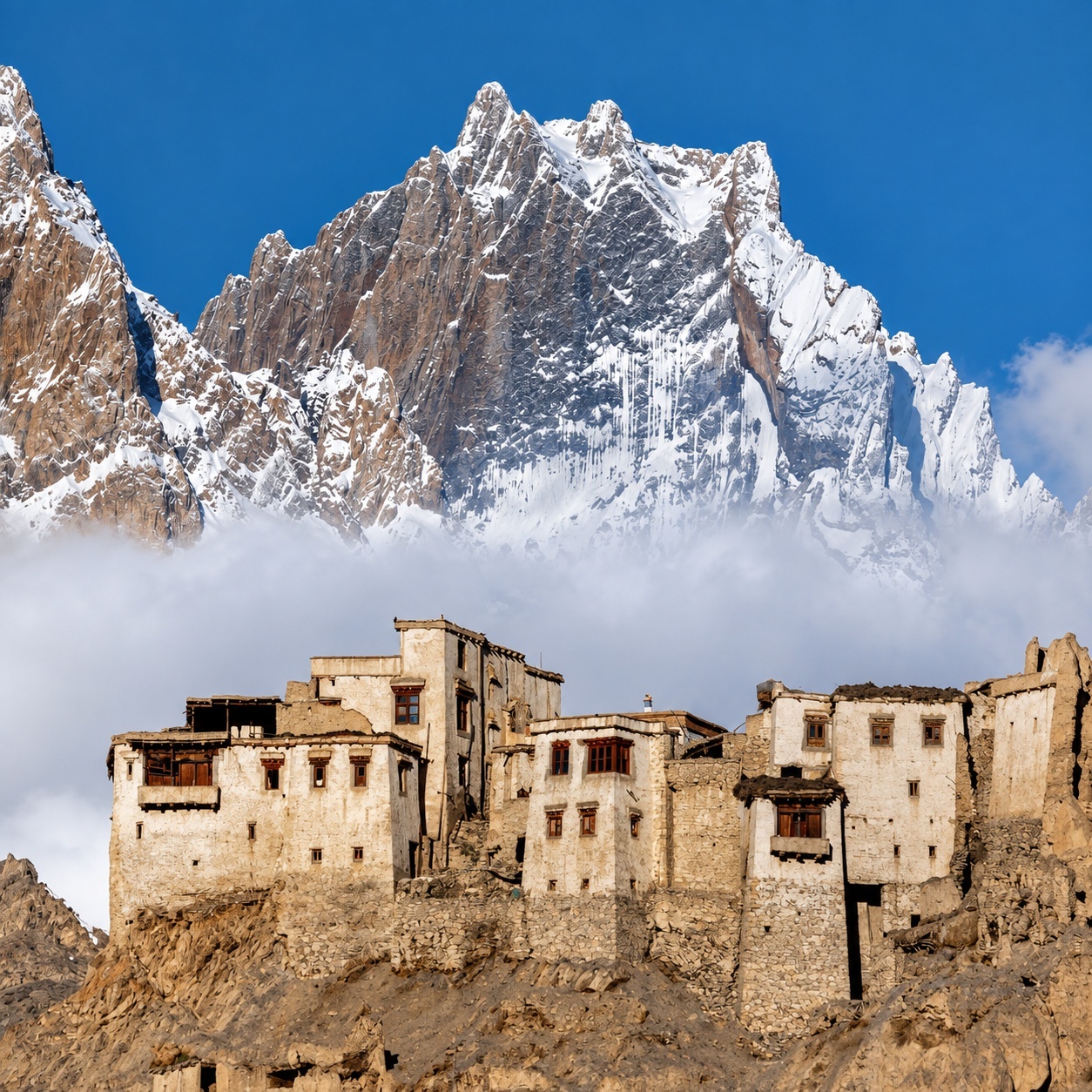
Ladakh is one of the few regions of the Himalayas where ancient Tibetan Buddhist culture has been preserved in an almost untouched form.
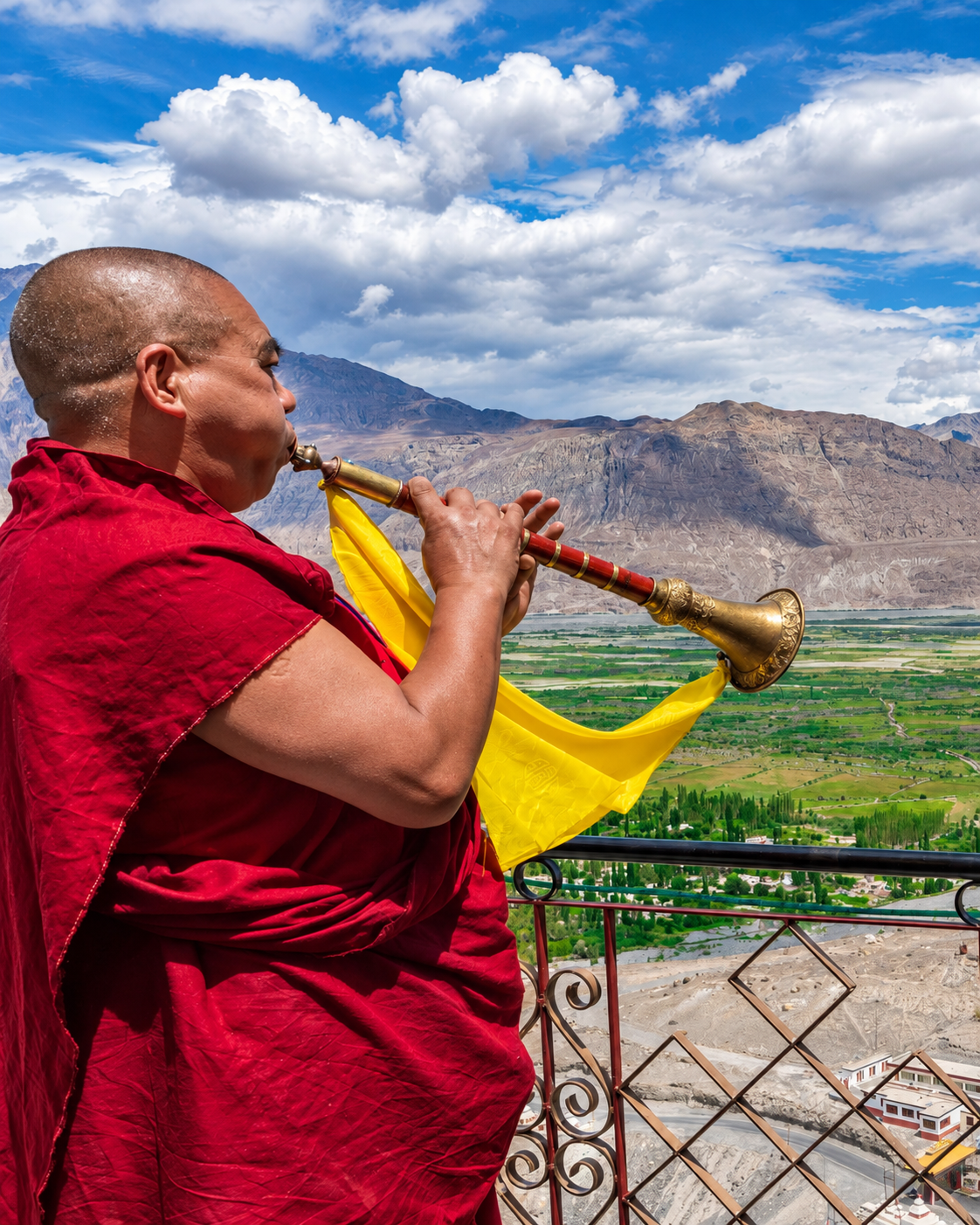
People come here not only for the landscapes. Ladakh offers a rare opportunity to experience a living spiritual tradition that has continued for centuries — in monasteries, ancient temples, and secluded retreat places still used by monks and yogis today.
People come here not only for the landscapes. Ladakh offers a rare opportunity to experience a living spiritual tradition that has continued for centuries — in monasteries, ancient temples, and secluded retreat places still used by monks and yogis today.
Our journey is designed to be more than a typical sightseeing tour
We will visit monasteries of different Tibetan traditions, caves and retreat sites associated with great masters, allowing time for meditation and practice while travelling at a calm, unhurried pace — without rushing from one attraction to another.


What is the purpose
of this journey?
of this journey?
-
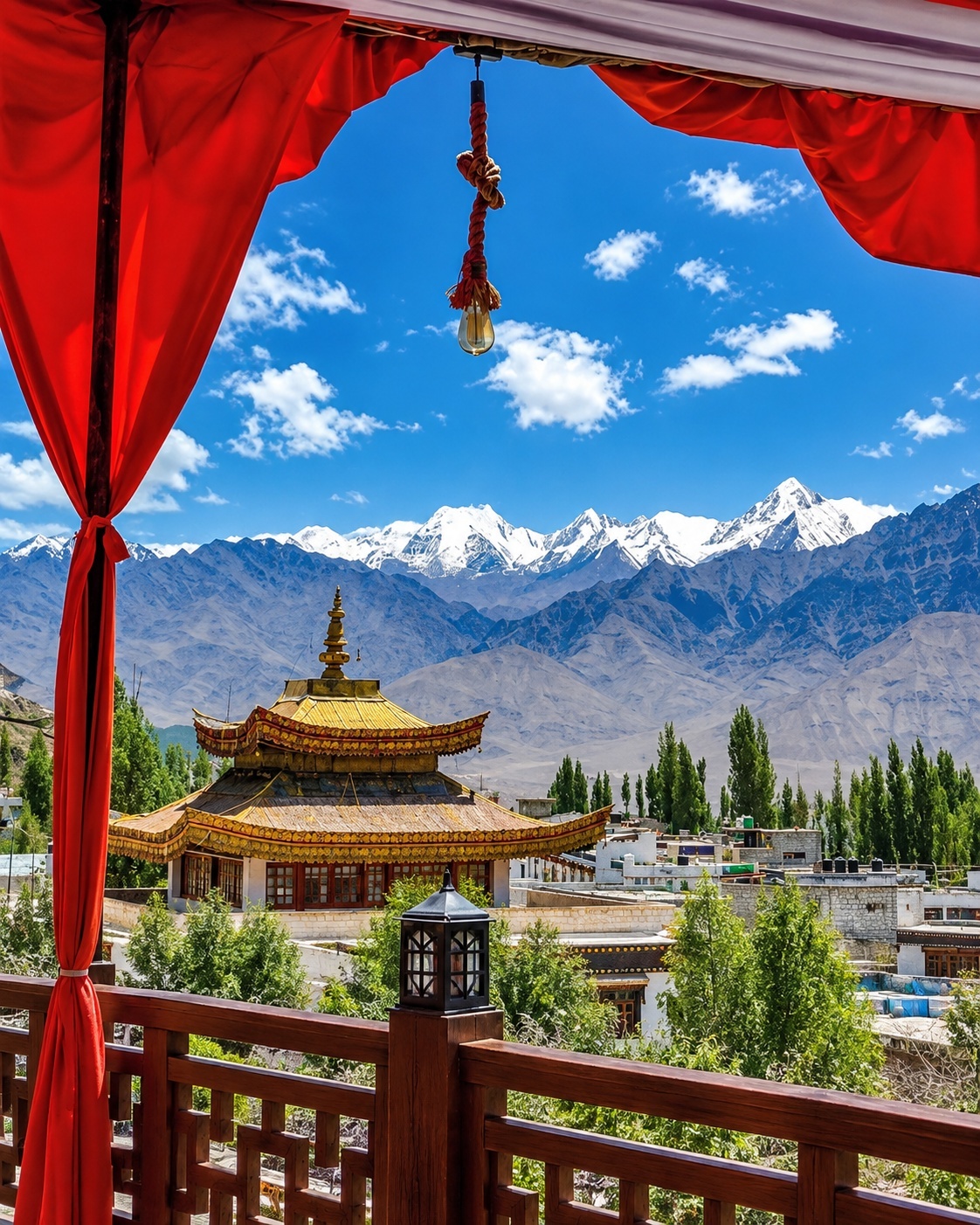
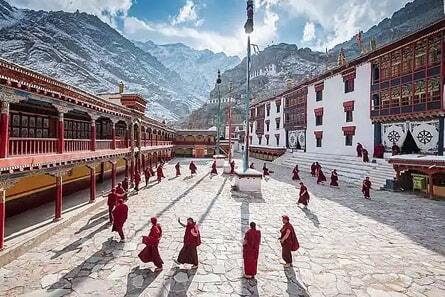
 Ancient monasteries of different traditionsActive monasteries of Yungdrung Bön, Nyingma, Drikung Kagyu, and Drukpa Kagyu — not simply as architectural monuments, but as living centers of practice and transmission.
-
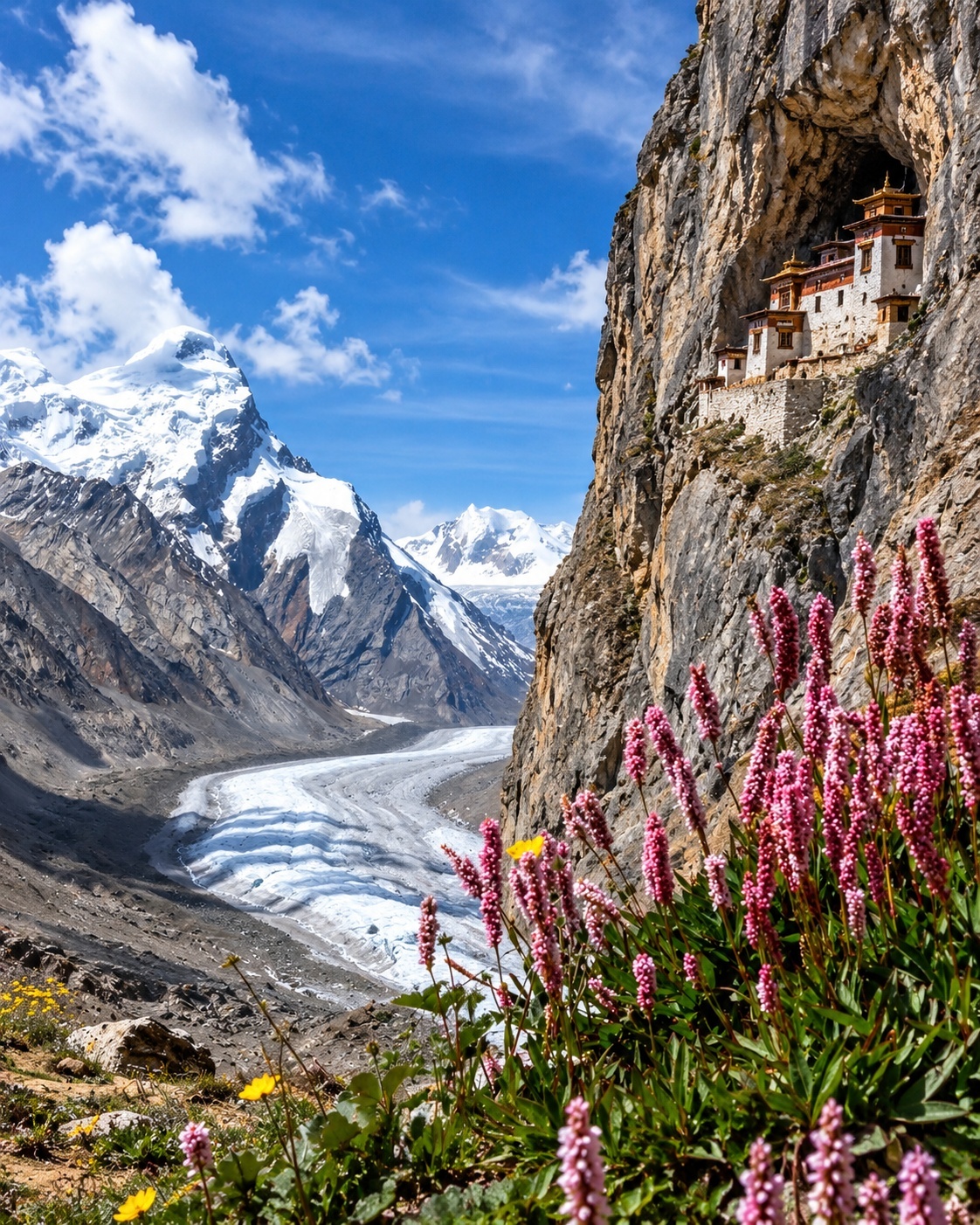
 Himalayan landscapes and high-altitude roadsThe Indus valleys, arid mountains, cliffside monasteries, high-altitude passes, and small villages. Here, the road itself is just as important a part of the journey.
-
 Time for personal practiceThe itinerary is designed without constant rushing. At the key sites, we allow enough time to meditate quietly rather than simply take a photo and move on.
-
 Sites associated with great mastersCaves and retreat sites associated with Padmasambhava, Naropa, and Gotsangpa.
-
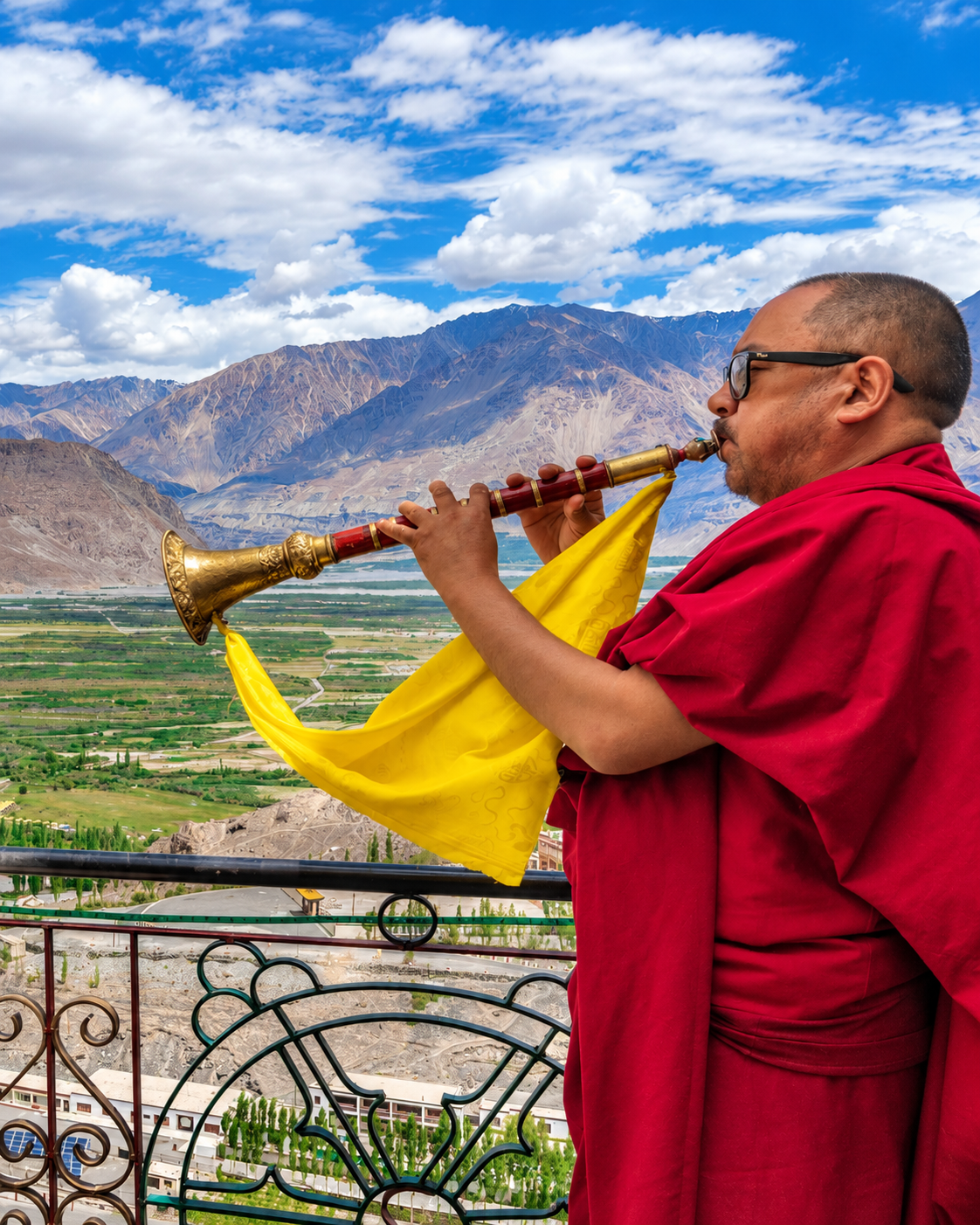
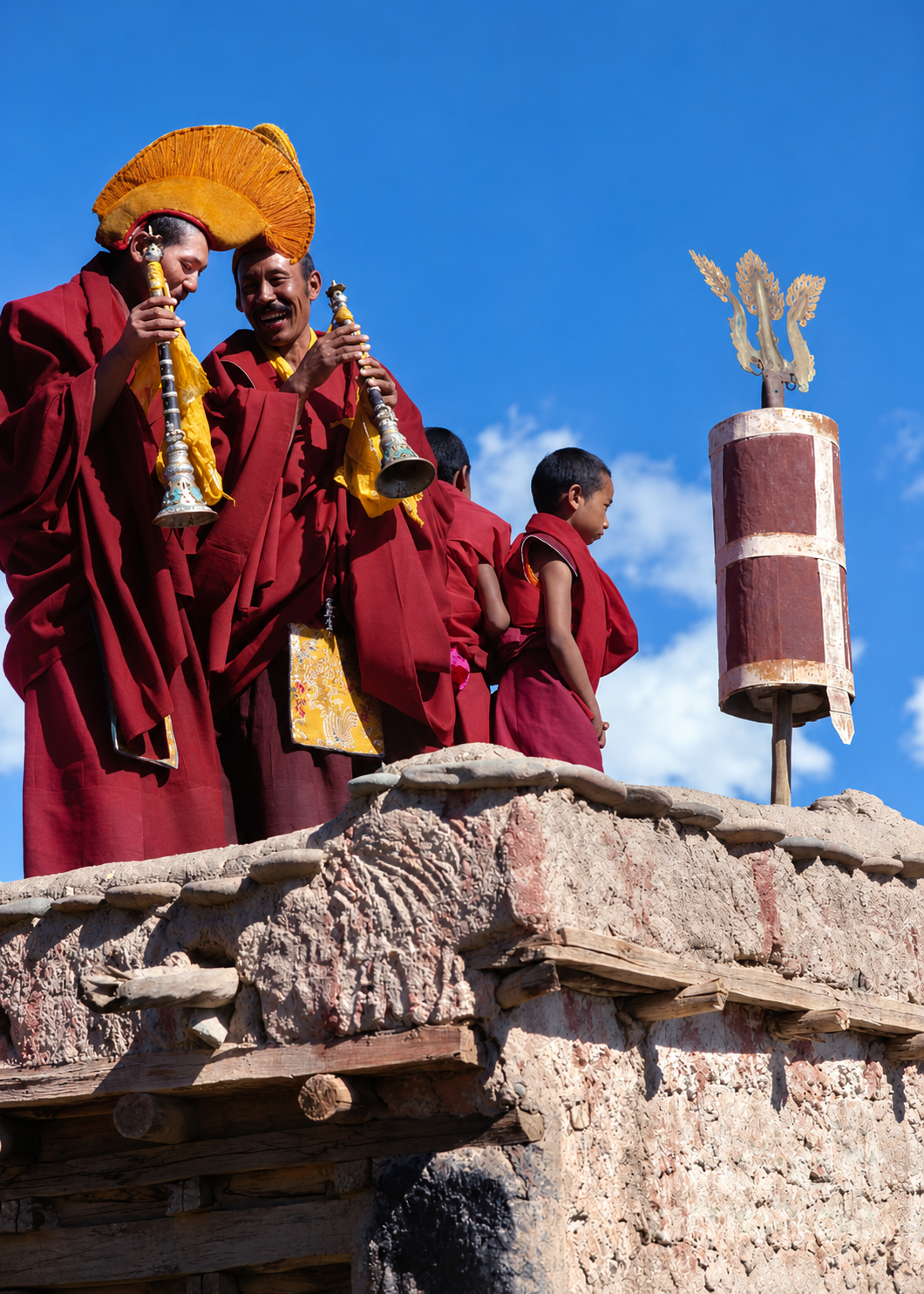
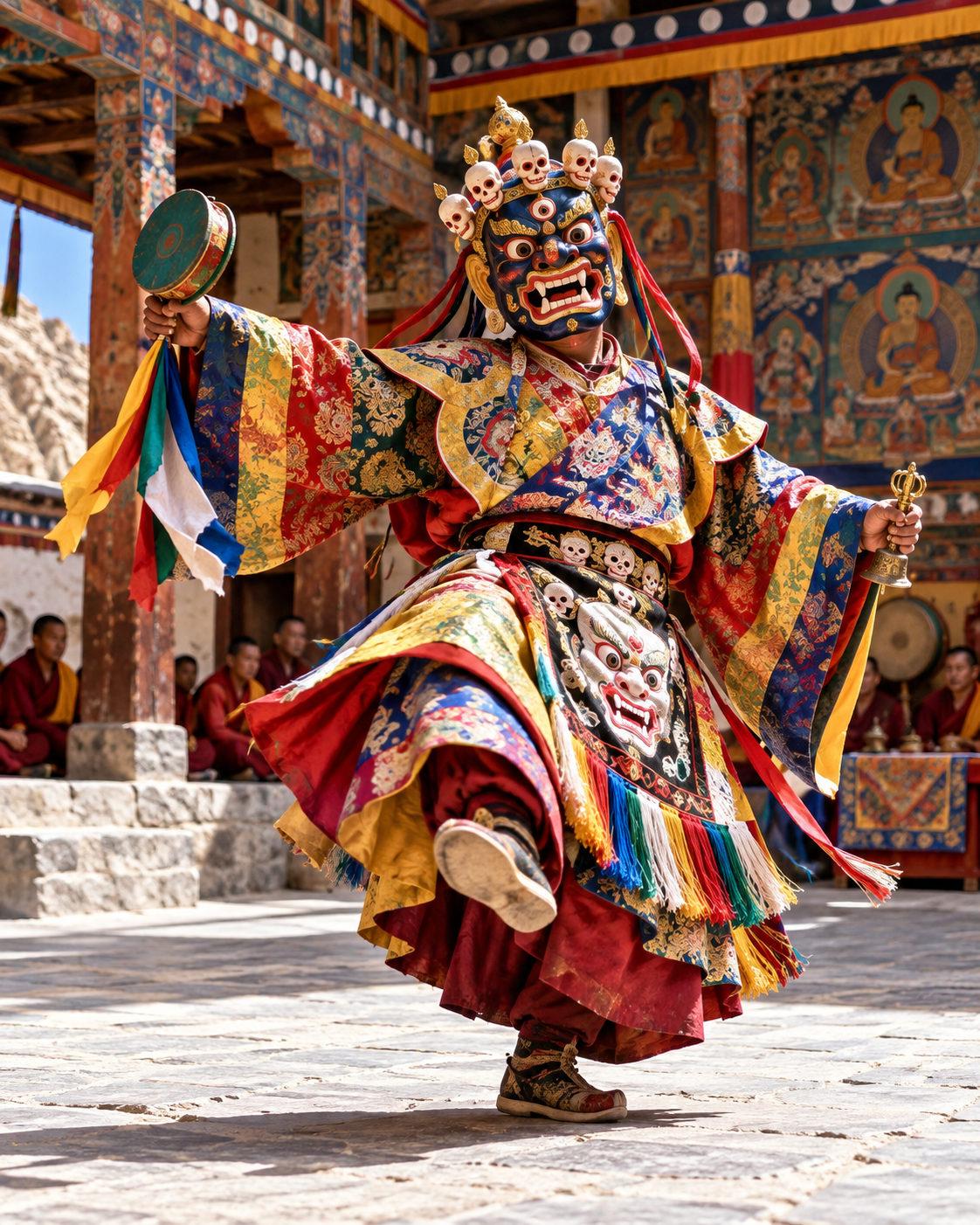
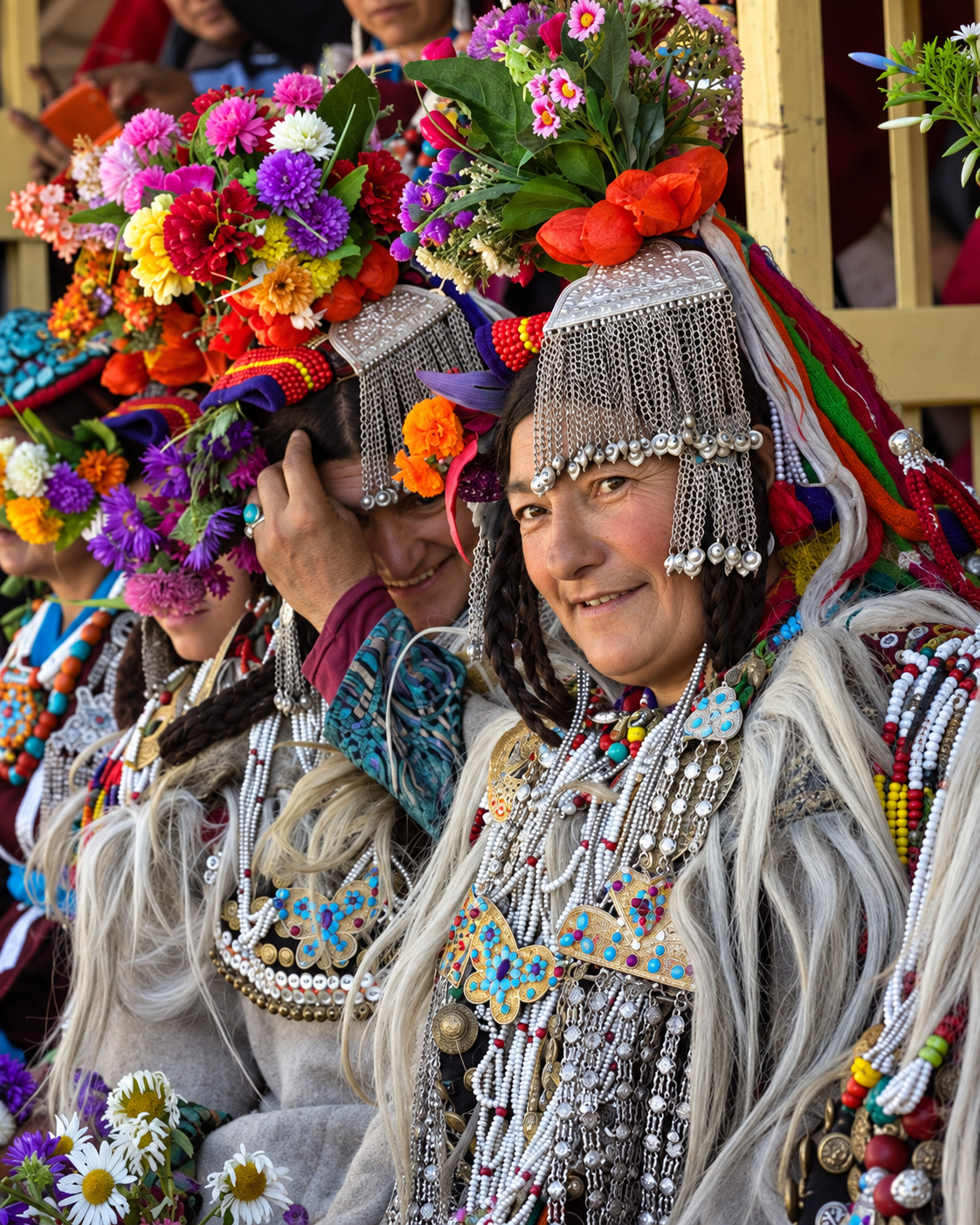
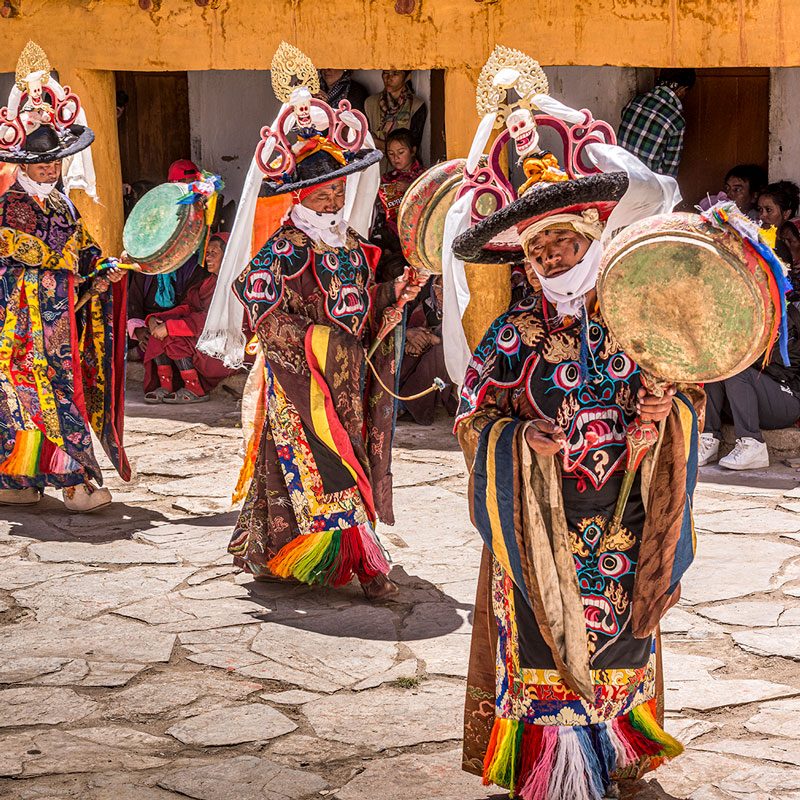
 The Living Culture of LadakhWe will also experience the Ladakh Festival in Leh — with traditional costumes, music, and ritual cham dances.
-
 Comfortable Travel ExperienceExpect 5-star hotels, an unhurried pace, and carefully planned acclimatization.
Program Overview
The journey is divided into two parts: the main pilgrimage to Ladakh’s sacred sites, and an optional trip to the Nubra Valley for those who would like to continue the journey.
Main Pilgrimage Through Ladakh
We will visit ancient monasteries of different Tibetan traditions, retreat caves, and sacred practice sites associated with Padmasambhava, Naropa, and other great masters.
Optional Trip to the Nubra Valley
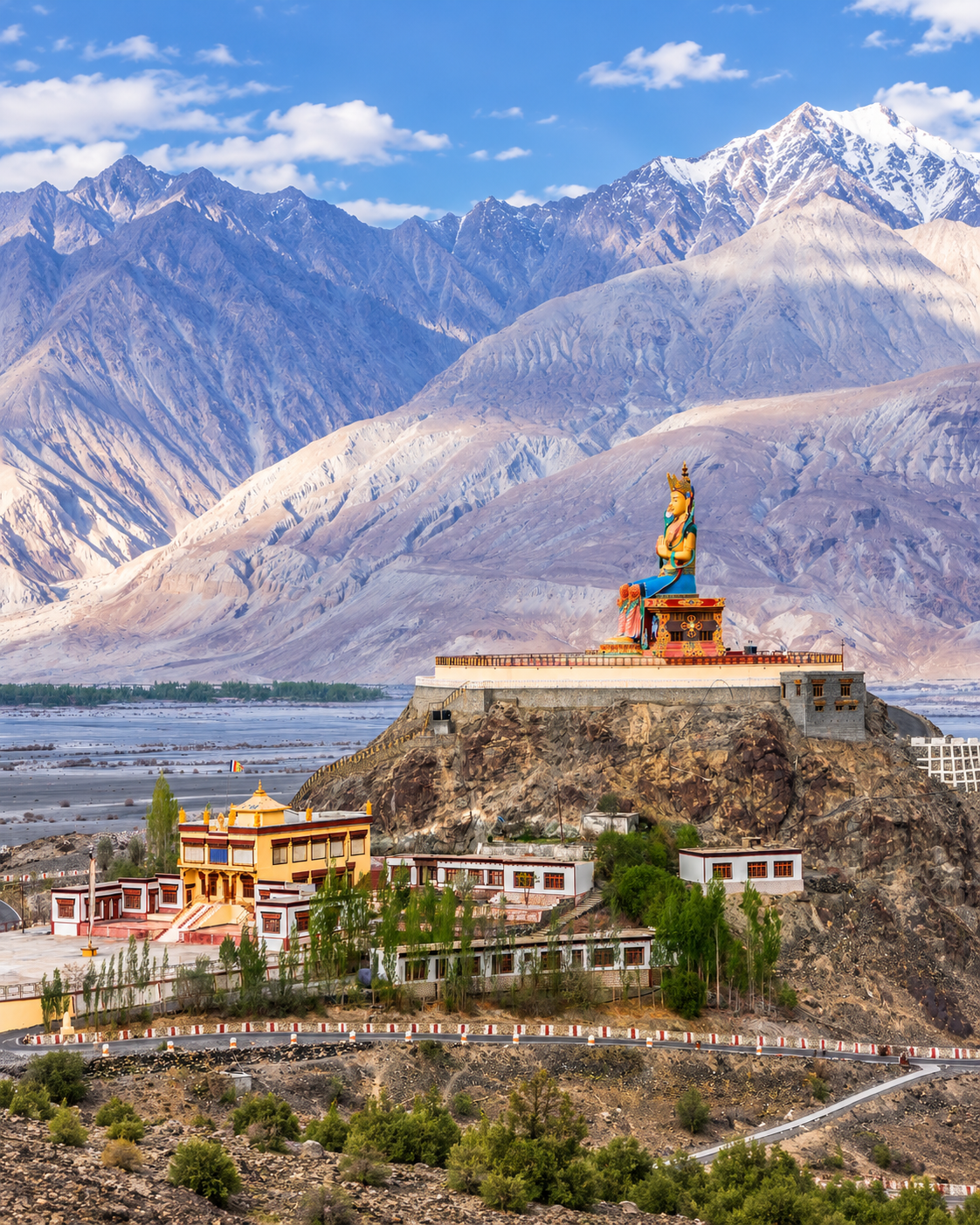
After the main program, those who wish can cross the high-altitude Khardung La Pass, relax at a beautiful hotel in Nubra, and experience a completely different side of Ladakh — wide valleys, desert landscapes, monasteries, and camels.
Key Places and
Highlights of the Journey
Hemis — one of Ladakh’s most important monasteries
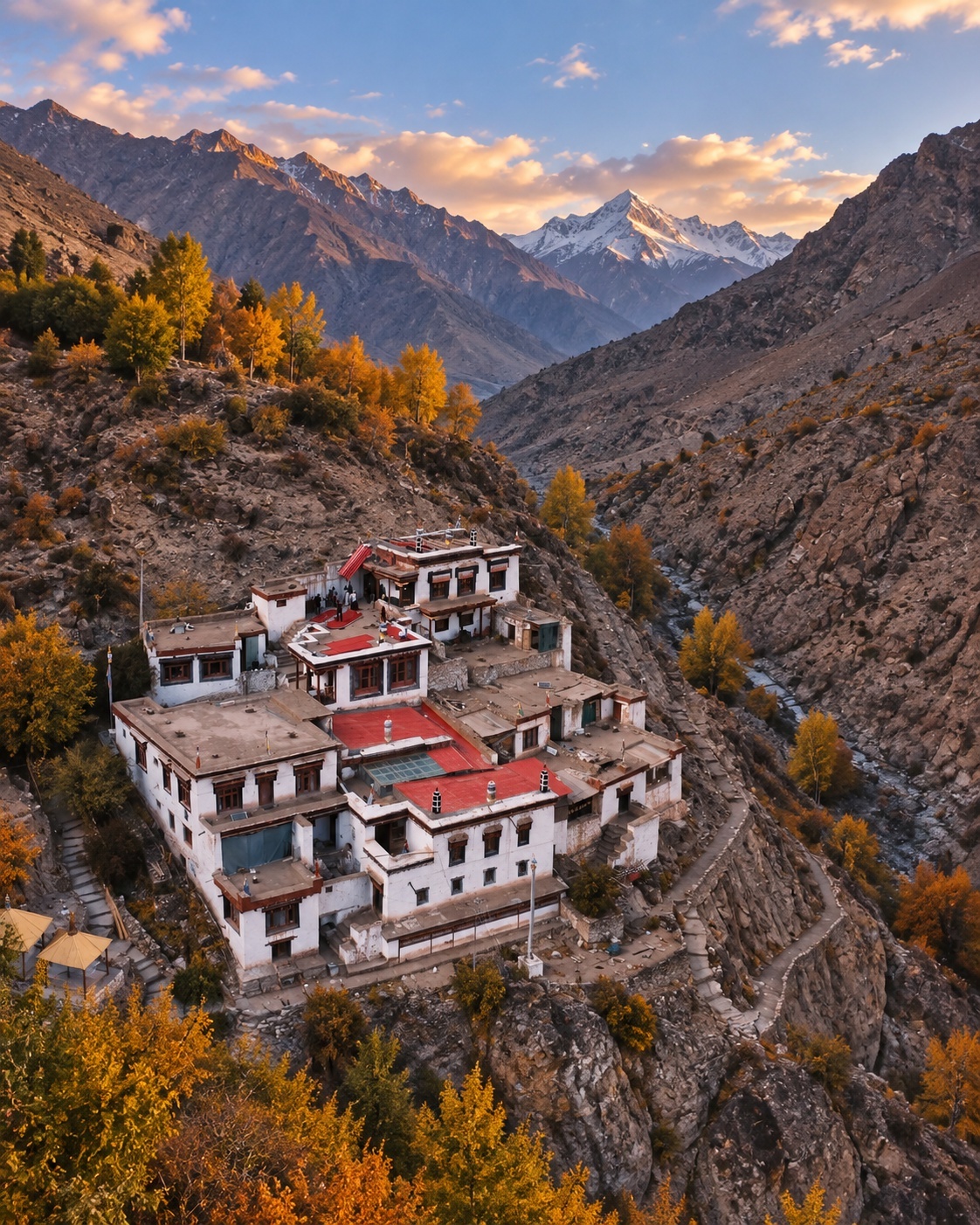
One of the largest and most significant monasteries in the region, Hemis is set in a secluded valley surrounded by mountains. It belongs to the Drukpa Kagyu tradition and is renowned for its centuries-old spiritual heritage, temples, and rich collection of sacred art.
Our experience goes beyond simply visiting the monastery: after Hemis, we continue on foot higher into the mountains, toward a place of secluded practice.
Our experience goes beyond simply visiting the monastery: after Hemis, we continue on foot higher into the mountains, toward a place of secluded practice.
Gotsang — a secluded retreat above the Hemis Valley
One of the most powerful places on our entire journey. From Hemis, we hike up into the mountains to a small retreat site associated with the tradition of long-term solitary practice.
We intentionally allow plenty of time for meditation here, rather than stopping for just a few minutes to take a photo.
We intentionally allow plenty of time for meditation here, rather than stopping for just a few minutes to take a photo.
Takthok — the Cave of Padmasambhava
Takthok Monastery grew around a cave where, according to tradition, Padmasambhava meditated in the 8th century.
Its name is often translated as “rock roof”: part of the monastery complex is literally built into the cliff.
It is the only major monastery in Ladakh belonging to the Nyingma tradition.
Its name is often translated as “rock roof”: part of the monastery complex is literally built into the cliff.
It is the only major monastery in Ladakh belonging to the Nyingma tradition.
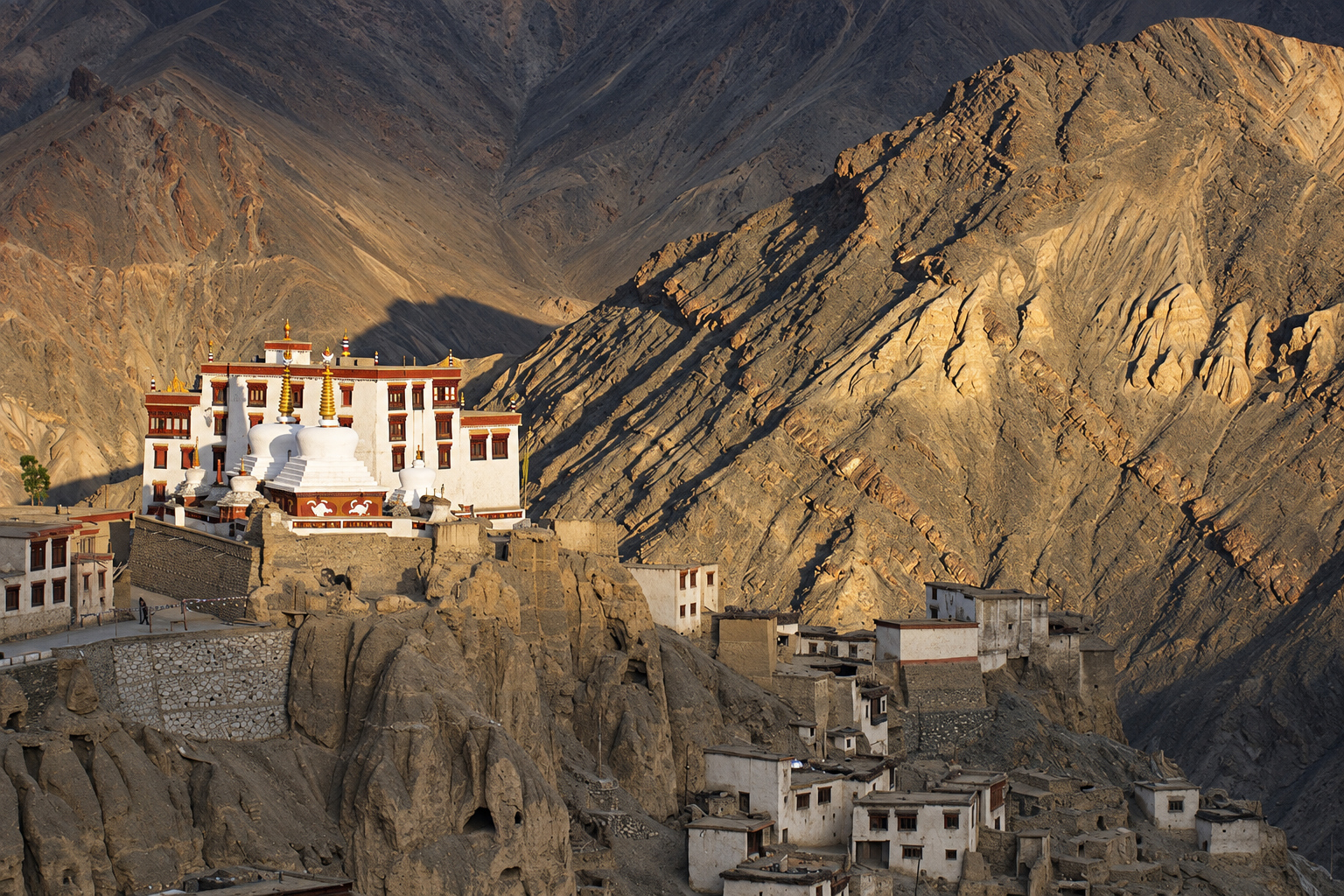
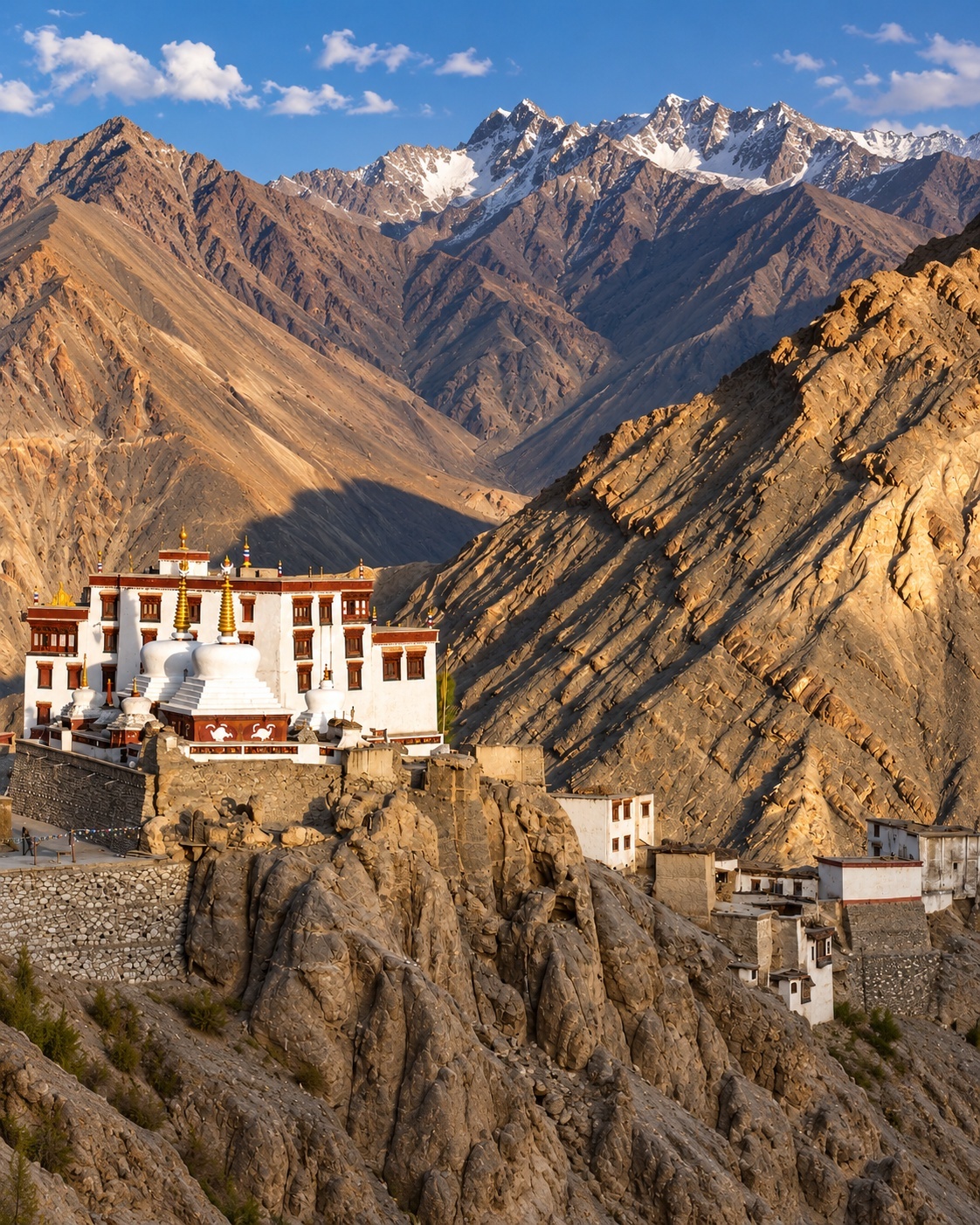
Lamayuru — the ancient Yungdrung monastery and the landscapes of the “Moonland”
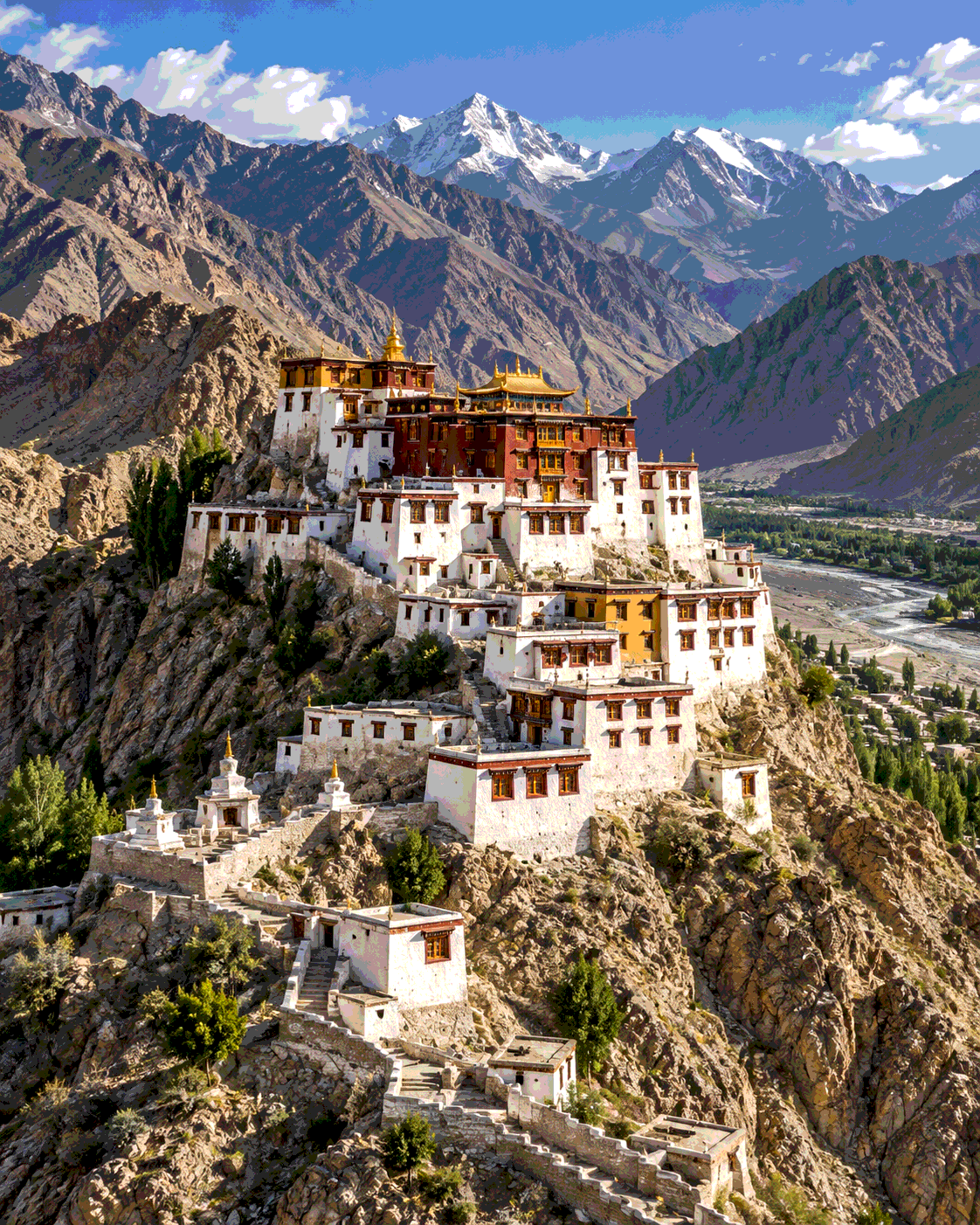
One of the oldest monastic sites in Ladakh and a truly distinctive stop on our journey. Lamayuru is historically associated with the Bön tradition; today, the monastery belongs to the Drikung Kagyu school.
The mahasiddha Naropa practiced here, and his cave is still preserved within the temple complex.
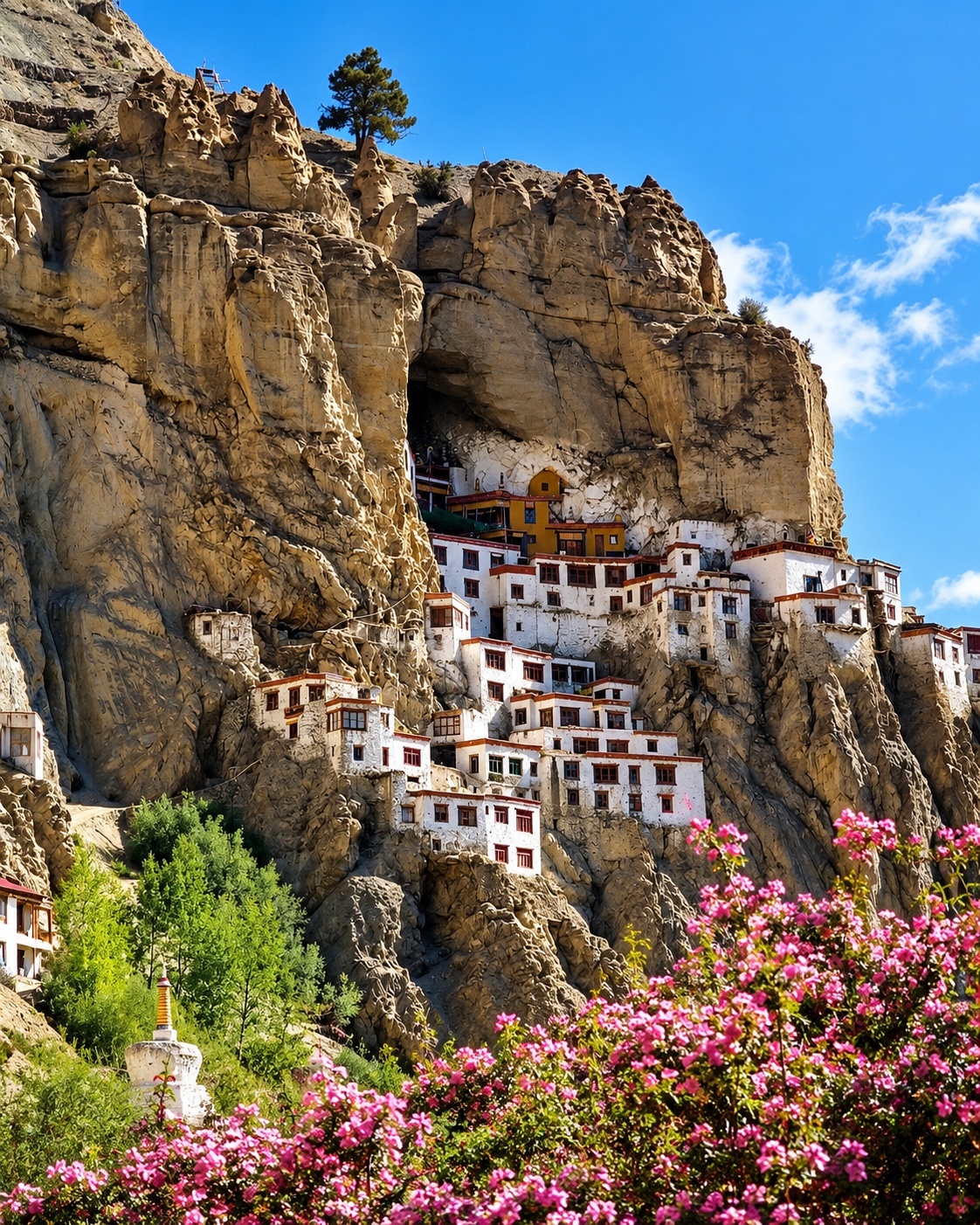
The main impression: a monastery perched on the cliffs, Naropa’s cave, and the extraordinary surrounding landscape.
The mahasiddha Naropa practiced here, and his cave is still preserved within the temple complex.
The main impression: a monastery perched on the cliffs, Naropa’s cave, and the extraordinary surrounding landscape.
Alchi — a thousand years of Himalayan art
Alchi is quite unlike most monasteries in Ladakh. It preserves some of the region’s oldest wall paintings — 11th–12th century art shaped by strong Kashmiri and Central Asian influences.
Inside are intricate mandalas, images of Buddhas and bodhisattvas, ancient sculpture, and finely carved woodwork.
We visit the temples and also set aside time for personal practice.
Inside are intricate mandalas, images of Buddhas and bodhisattvas, ancient sculpture, and finely carved woodwork.
We visit the temples and also set aside time for personal practice.
Shenten Yungdrung Lhatse — an encounter with the Bön tradition
One of the places on our journey directly connected with the Yungdrung Bön tradition.
For our group, this is an especially important pilgrimage site.
For our group, this is an especially important pilgrimage site.
The roads of Ladakh — part of the pilgrimage itself
The journey between the sacred sites becomes part of the pilgrimage itself: the Indus Valley, vast desert mountains, some of the world’s highest motorable passes, small villages, and monasteries perched on the hillsides.
We intentionally keep the itinerary at a relaxed pace, so that Ladakh does not turn into a constant sequence of drives and photo stops.
We intentionally keep the itinerary at a relaxed pace, so that Ladakh does not turn into a constant sequence of drives and photo stops.
Day-by-Day Itinerary

Arrival in Leh, airport pickup, transfer to the hotel, and check-in. A full day of rest and acclimatization at an altitude of around 3,500 m, with no long drives or intensive activities. If you’re feeling well, we’ll take a short walk to Shanti Stupa.

A relaxed morning with continued acclimatization. We’ll travel to Choglamsar to visit Shenten Yungdrung Lhatse Monastery of the Yungdrung Bön tradition, followed by Thupten Dongak Shedup Chokhorling, a Nyingma monastery. Return to Leh in the evening.

In the morning, we’ll leave Leh and head toward Hemis, stopping along the way at Naropa Stupa. We’ll then visit Hemis Monastery, one of the principal Drukpa Kagyu monasteries in Ladakh.
After exploring the monastery, we’ll hike up to Gotsang Hermitage, a secluded retreat site above Hemis. We’ll spend an extended period there for group meditation practice in a quiet setting.
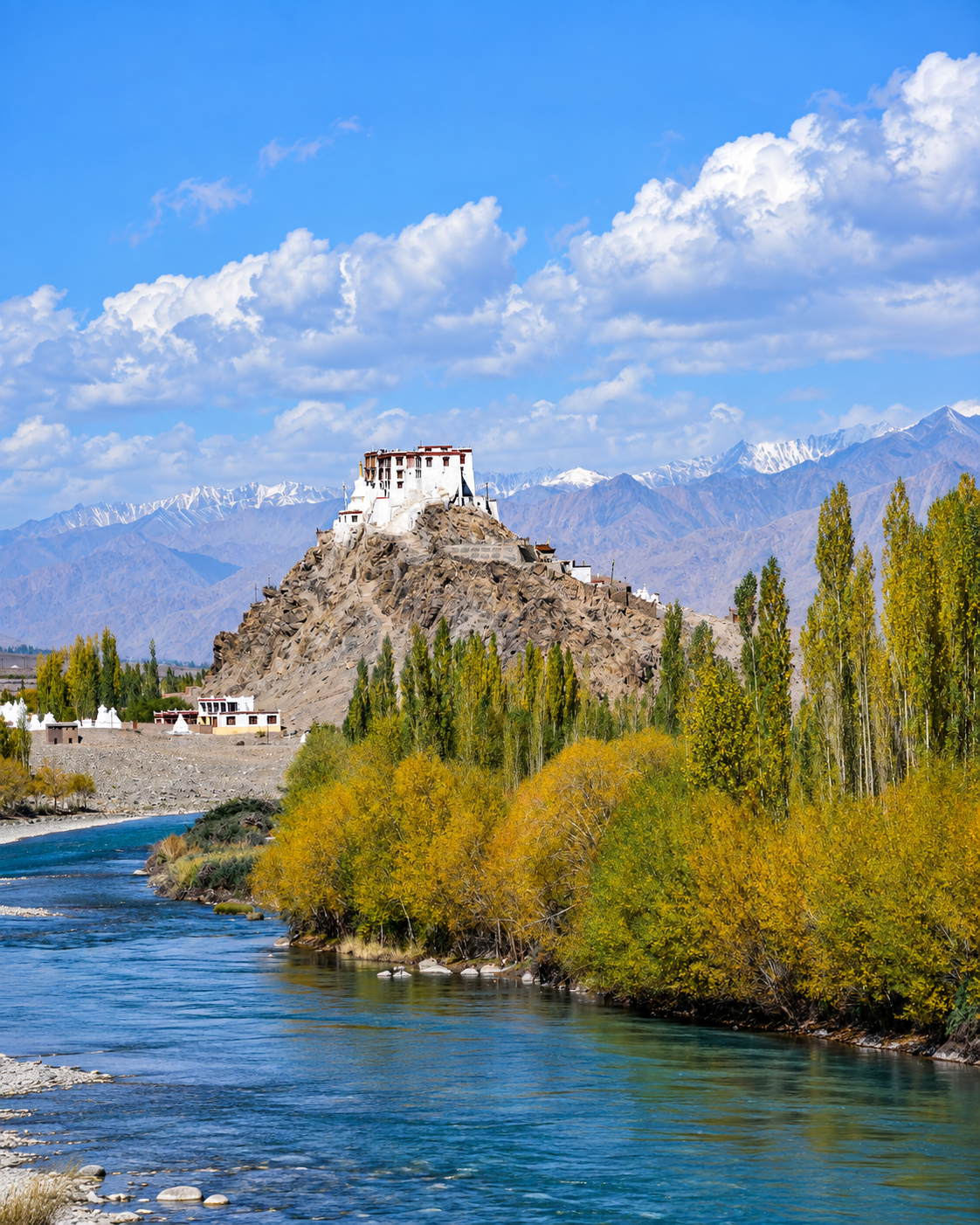
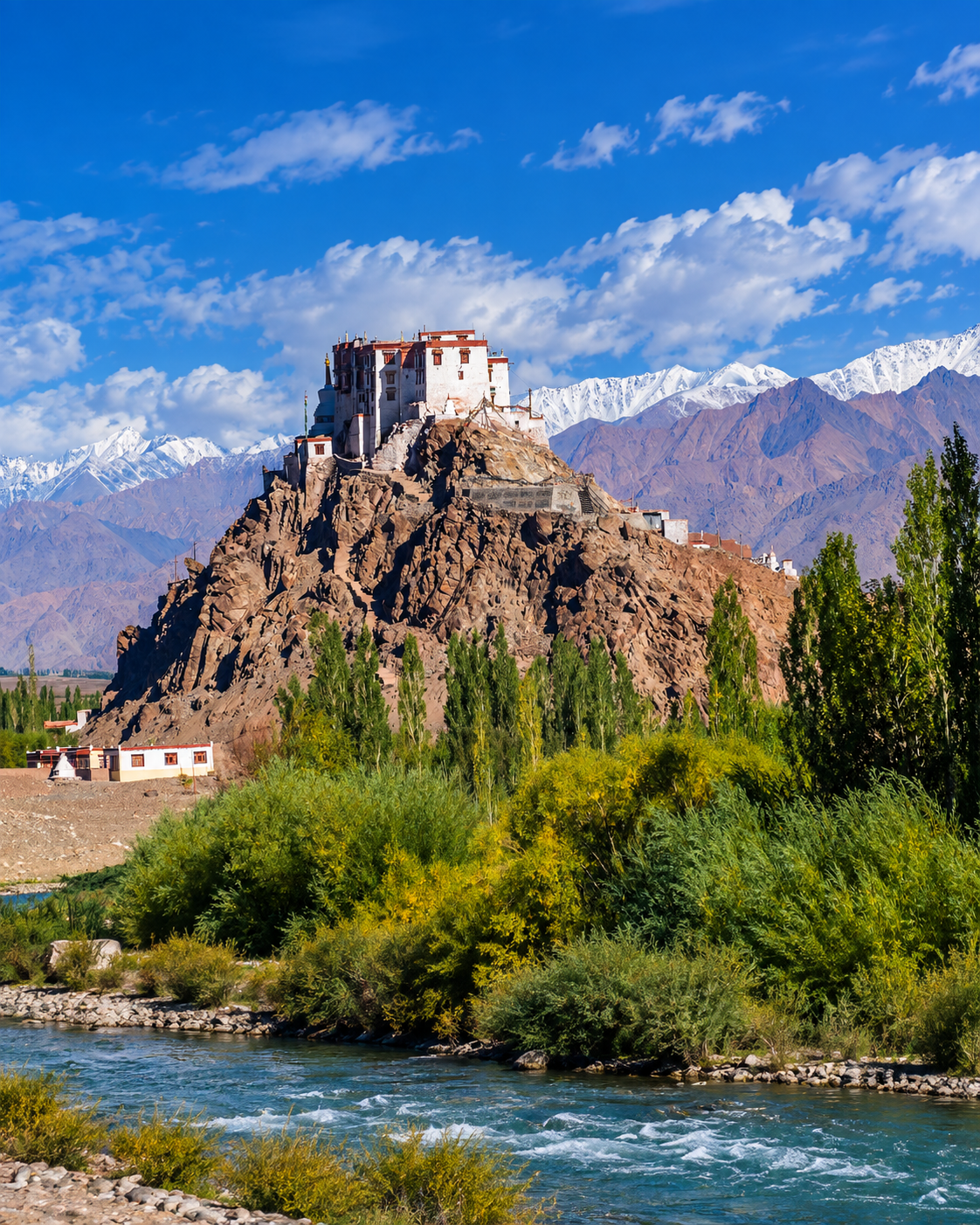
After the practice, we’ll hike back down to Hemis, where our transport will be waiting. On the way back to Leh, we’ll visit Stakna Monastery, a Drukpa Kagyu monastery dramatically perched on a rocky hill above the Indus River, before returning to Leh.

In the morning, we’ll leave Leh and head toward Chemrey Monastery. We’ll visit this Drukpa Kagyu monastery, known for its impressive two-storey statue of Guru Padmasambhava.
From there, we’ll continue to Takthok Gonpa, the only traditional Nyingma monastery in Ladakh.
The main part of the day will be devoted to Takthok and Drakpuk, the cave associated with Padmasambhava around which the monastery complex developed.
If permitted by the monastery, we’ll allow time here for quiet contemplation and practice before returning to Leh.

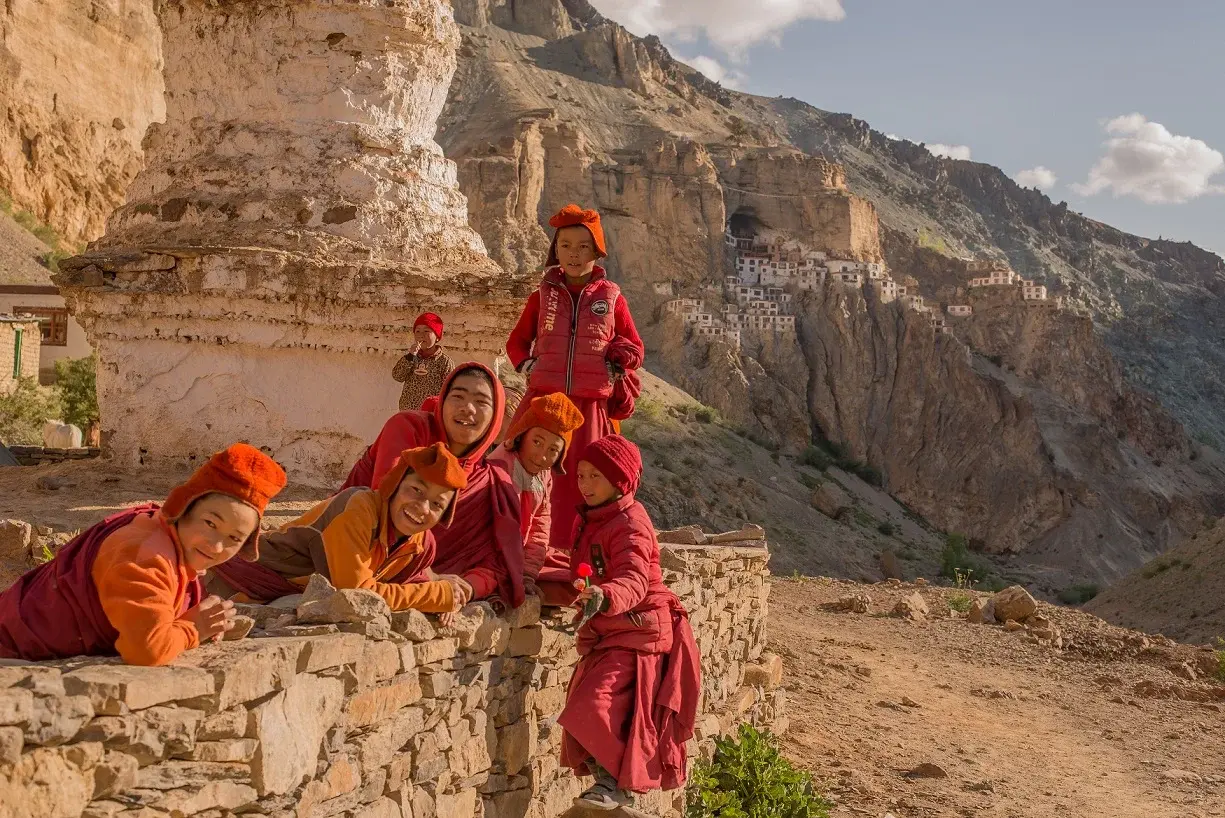
A relaxed morning, followed by a visit to Phyang Monastery, one of the main historic centers of the Drikung Kagyu tradition in Ladakh. We’ll allow around 1.5–2 hours for the visit.
Afterward, we’ll return to Leh for lunch and spend the late afternoon and evening attending some of the most interesting events of the Ladakh Festival.
Afterward, we’ll return to Leh for lunch and spend the late afternoon and evening attending some of the most interesting events of the Ladakh Festival.

After breakfast, we’ll leave Leh and head west to Alchi Choskhor, an ancient temple complex renowned for its unique 11th–12th century murals. We’ll explore the temples at a relaxed pace and set aside time for meditation practice.
In total, we’ll spend around 2.5–3 hours in Alchi so the visit feels like more than a standard sightseeing stop. After lunch in Alchi, we’ll make a short drive to The Apricot Hotel in Nurla. The hotel is located on the bang of the spectacular mountain river. Check in, rest, and enjoy dinner.
In total, we’ll spend around 2.5–3 hours in Alchi so the visit feels like more than a standard sightseeing stop. After lunch in Alchi, we’ll make a short drive to The Apricot Hotel in Nurla. The hotel is located on the bang of the spectacular mountain river. Check in, rest, and enjoy dinner.

After breakfast, we’ll depart for Lamayuru. Thanks to our overnight stay in Nurla, we can arrive in the morning without the long drive from Leh and spend 3–4 hours, or even longer, at the monastery — exploring the main complex, visiting Naropa’s cave, setting aside time for meditation and practice, and walking around the area.
We’ll have lunch near Lamayuru, then return directly to Leh in the afternoon.
We’ll have lunch near Lamayuru, then return directly to Leh in the afternoon.

We’ll leave Leh at around 8:30 AM and begin the spectacular ascent to Khardung La, one of the highest motorable mountain passes in the world, rising to around 5,600 meters above sea level.
We’ll stop at the pass for 30–40 minutes to take in the views, enjoy a cup of tea, and take photographs surrounded by the high Himalayan landscape.
From there, we’ll descend into the Nubra Valley, with a few short photo stops along the way. We expect to arrive at the hotel around 2:00–3:00 PM, followed by check-in, a late lunch, and time to rest.
The evening will be free to relax at the hotel or take a leisurely walk nearby.

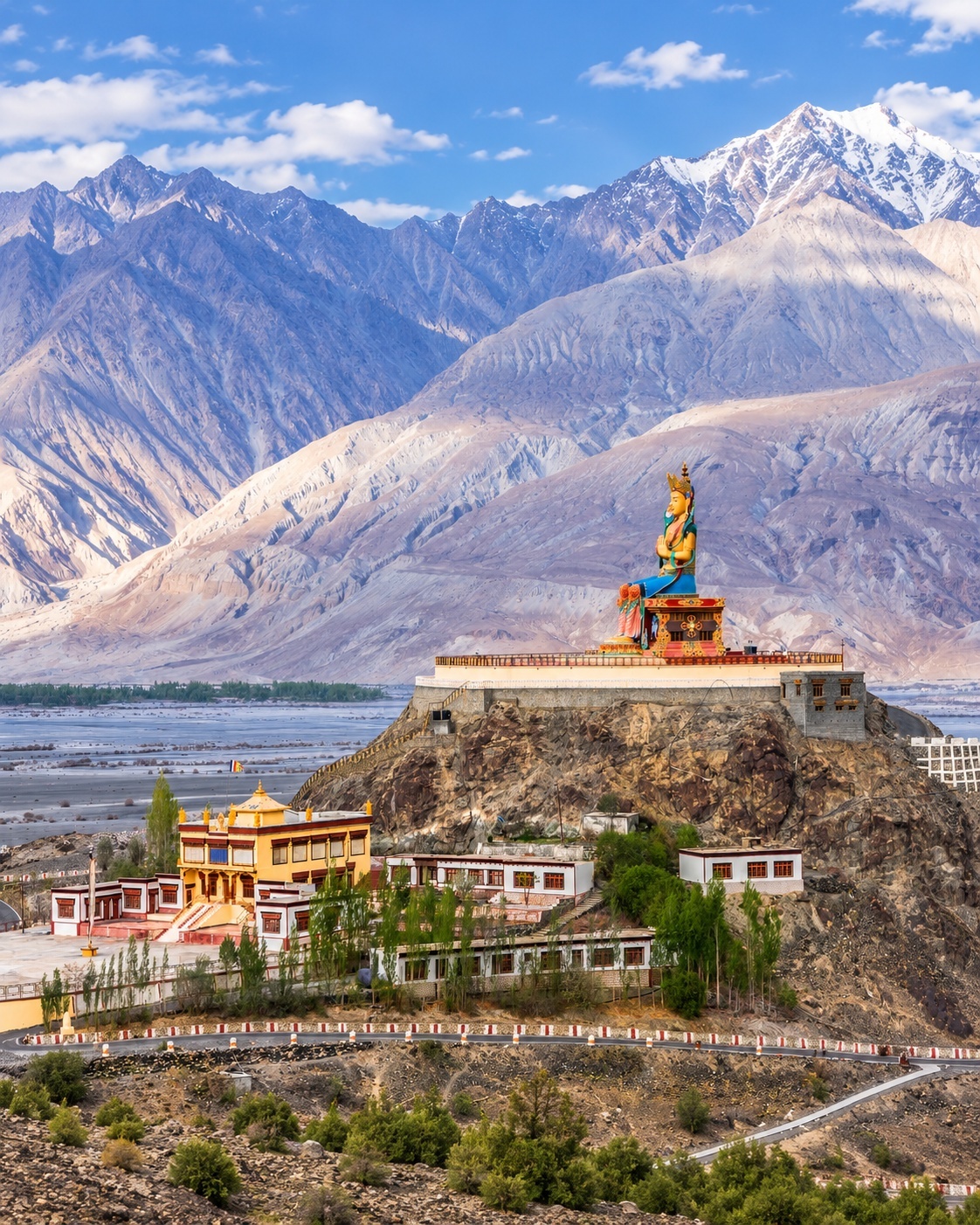
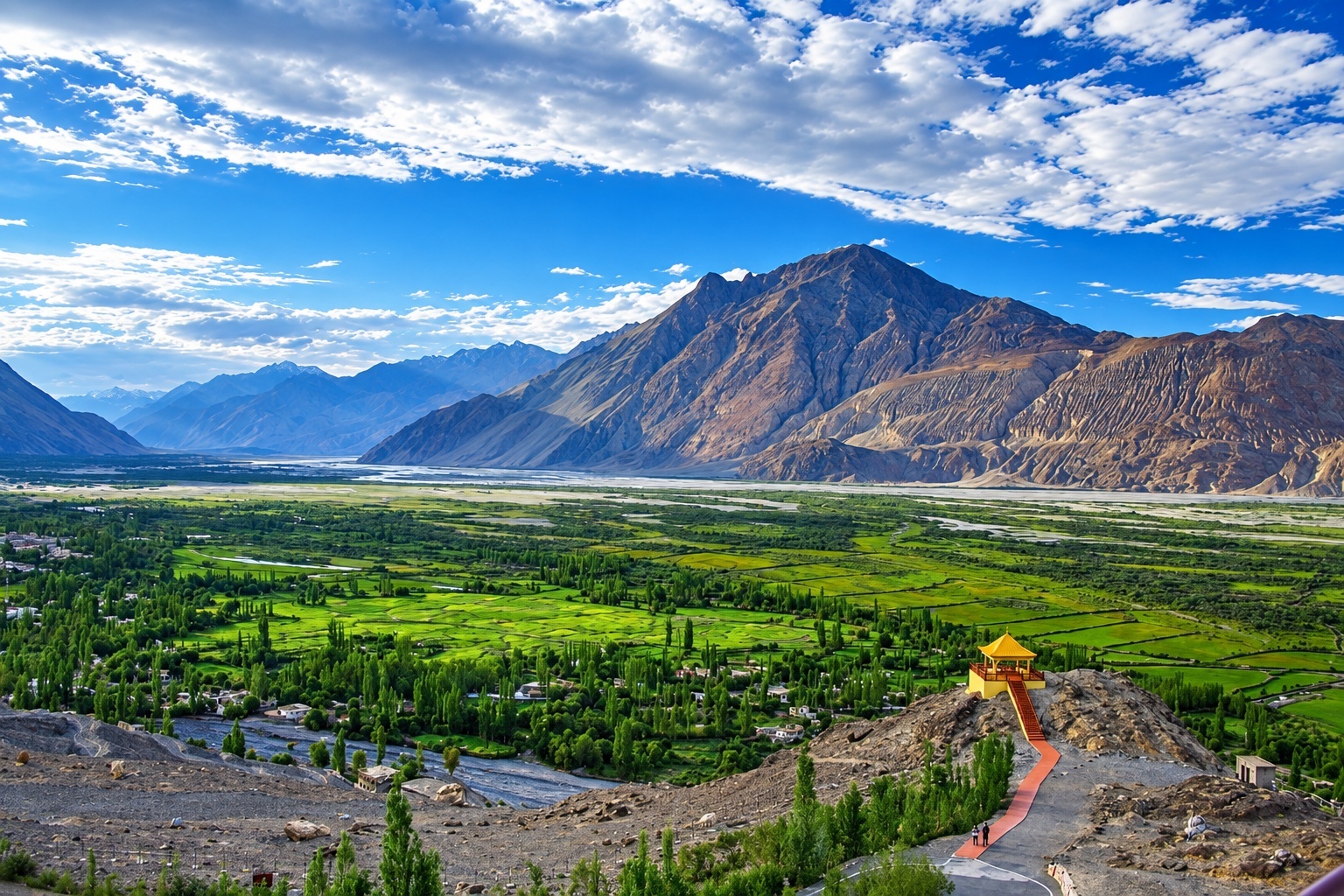
A full day in the valley with no long drives! Breakfast, time to relax at the hotel, or visit to Diskit Monastery and Hunder Sand Dunes. You can ride on double-humped Bactrian camels. Leisurely walks, and sunset in the valley.

A relaxed breakfast, followed by departure at around 9:00–10:00 AM. We’ll return to Leh via Khardung La pass, with a few short stops along the way for photos and coffee or tea.
We expect to arrive in Leh around 3:00–4:00 PM, check in at the hotel, and enjoy a free evening.
We expect to arrive in Leh around 3:00–4:00 PM, check in at the hotel, and enjoy a free evening.
Would you like to travel to Ladakh with us?
You can reserve your place in the group now.
You can reserve your place in the group now.
Accommodation and Comfort
Throughout the main program, the group will stay in 5-star hotels with comfortable rooms, high-quality service, and everything needed to fully relax and recharge after days spent travelling and visiting monasteries.


Nubra Valley
In the Nubra Valley, the accommodation will shift to luxury glamping — premium tents with proper beds, private bathrooms, and views of the mountains and river. We’ll also have time for meditation and relaxation in nature.
-
 LocationLadakh,
Northern India,
the Himalayas -
 Duration7 days / 7 nights
optional extension:
3 days / 3 nights -
 HotelsWe stay in 5-star hotels,
and in the Nubra Valley — luxury glamping. -
 VisaAn e-Visa is required and can be obtained online. We’ll assist you with the application.
-
 Altitude3,500–4,000 m above sea level, with a gradual acclimatization built into the itinerary.
-
 PracticeAt monasteries and retreat sites, we’ll have time for meditation and personal practice.
-
 LanguageRussian and English. All organizational information will be available in both languages.
-
 FoodBreakfasts are served at the hotels, with other meals at carefully selected restaurants.
Our Previous Pilgrimages
In 2026, we traveled together through Kham in Eastern Tibet, visiting monasteries and sacred places, practicing, and spending time in the mountains. Ladakh will be the next pilgrimage journey with Rigpa Academy.


Travel Cost
This price is valid for early bookings made before March 1, 2027.
Main
Program
Program
7-day pilgrimage to Ladakh’s main sacred sites
$2450

Accommodation in 5-star hotels throughout the journey
All transfers and transportation included in the program
Breakfasts at the hotels
Airport pickup and transfer from Leh Airport
Transfer to the airport on the day of departure
Services of a local guide
Accompanied by a guide from Rigpa Academy
All excursions included in the program
Entrance fees and site charges at all places visited
Organizational support
Translation into English
Paid separately: flights to and from Ladakh (your city–Delhi–Leh), travel medical insurance, Indian eVisa, meals (except hotel breakfasts), and optional tips for the Indian driver and guide.
Still have questions or need a consultation?
Leave your details, and we’ll get in touch to answer any questions you may have!

Registration for the Ladakh Pilgrimage
(India, Little Tibet)
(India, Little Tibet)
Fill out the form, and we’ll contact you with the available payment options and all the details about the journey.
By clicking this button, you agree to our Personal Data Processing Policy.